How to Manufacture Cosmetics Legally: From Handcrafted Workshop to Lawful EU Market Launch
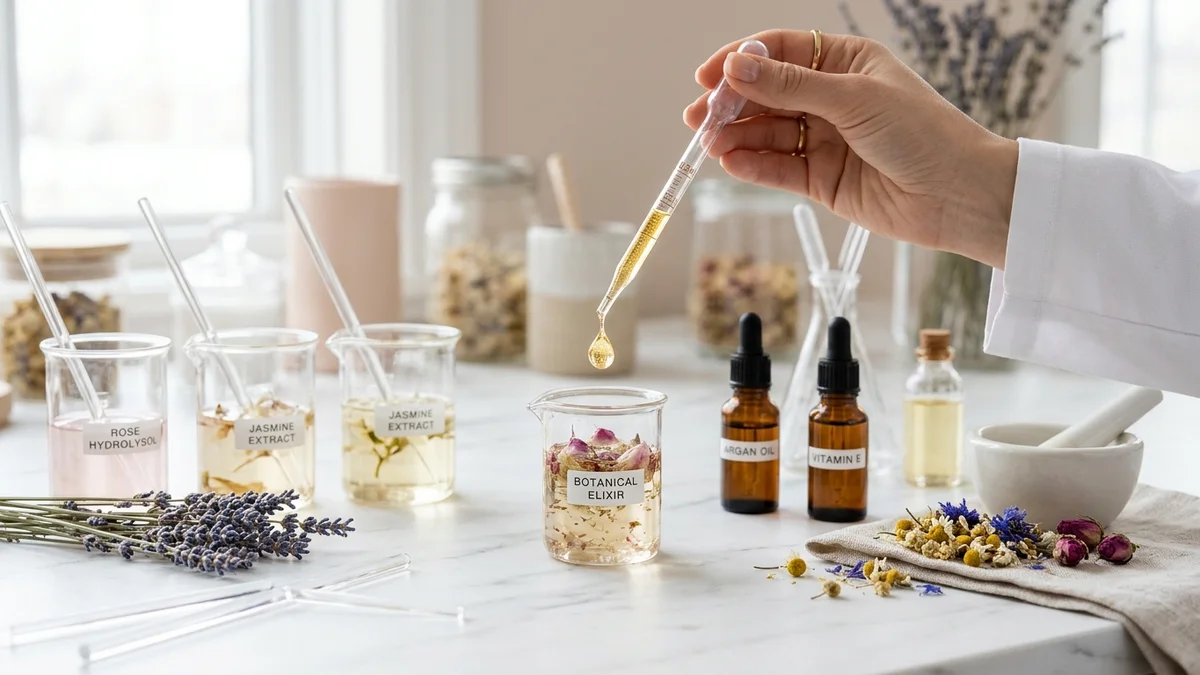
Manufacturing your own personal care products - handcrafted cold-process soaps, nourishing body balms, botanical face serums, or gentle shampoos - is an empowering journey that blends creative passion with cosmetic chemistry. However, transitioning from making personal skincare in a home kitchen to legally selling cosmetic goods to the public requires understanding European cosmetic legislation. In the European Union, Regolamento (CE) N. 1223/2009 regulates all cosmetic goods placed on the market, whether made by an independent artisan or a large laboratory. From raw material qualification to ISO 22716 Buone Pratiche di Fabbricazione (GMP (ISO 22716)) (GMP (ISO 22716)) and Product Information File (PIF) (PIF) compilation, discover our comprehensive regulatory roadmap.
💡 Ready to transition your cosmetic creations from hobby to a legal business? Discover the regulatory steps and timeline. Estimate your costs in 2 minutes with our configurator.
Phase 1: Formulation and Raw Material Qualification
The first phase of lawful cosmetic manufacturing consists of locking your recipe into a professional formula and documenting every constituent:
- Qualitative and quantitative formula freeze: Every raw material must be expressed with its official INCI name, CAS number, EINECS number, and exact percentage by weight, totaling exactly 100.00%.
- The mandatory raw material documentation trio: For each ingredient purchased, you must obtain three documents from suppliers: the Safety Data Sheet (SDS in 16 REACH sections, compliant with Regulation (EU) 2020/878), the Technical Data Sheet (TDS), and the batch-specific Certificate of Analysis (CoA). Ingredients purchased at grocery stores without technical documentation cannot be used.
- Compliance with EU Regulation Annexes: Ensure that no substance in your formula appears on Annex II (banned substances) and that all restricted substances (Annex III, IV, V, VI) comply strictly with legal concentration limits and application conditions.
To understand the legal foundation of cosmetic safety documentation, review our reference guide on the PIF cosmetici and discover our tailored PIF services.
🔬 Valutatore della Sicurezza Cosmetica Insights
"Commercial cosmetic formulation demands strict adherence to the annexes of Regolamento (CE) N. 1223/2009. Annex II lists over 1,600 prohibited substances, while Annex III establishes specific concentration limits, purity criteria, and mandatory warning labels for restricted substances (such as salicylic acid, thioglycolates, or essential oil allergens). Before finalizing your product packaging, our regulatory team verifies formula compliance against all EU annexes, preventing costly manufacturing errors and regulatory blocks."
Phase 2: Workshop Setup and Buone Pratiche di Fabbricazione (GMP (ISO 22716)) (ISO 22716)
Cosmetics cannot be produced in a domestic living environment. Article 8 of Regolamento (CE) N. 1223/2009 mandates that cosmetic manufacturing comply with Buone Pratiche di Fabbricazione (GMP (ISO 22716)) (GMP (ISO 22716)), standardized under ISO 22716:
- Dedicated production space: A designated workshop room physically isolated from living areas, featuring smooth, non-porous washable floors and walls, stainless steel working surfaces, and appropriate ventilation.
- Standard Operating Procedures (SOPs): Documented cleaning protocols, raw material receipt inspections, equipment calibration procedures (analytical scales), and water purification verification.
- Batch records and traceability: Every manufactured batch must have a completed batch manufacturing record noting raw material batch numbers, manufacturing date, operator identity, yield, and retain samples stored for the duration of product shelf life.
- Facility declaration with competent authorities: In France, the manufacturer must declare their manufacturing facility to ANSM prior to commencing commercial operations. Similar competent authority declarations apply across EU member states.
⚠️ 3 Regulatory Errors When Transitioning from DIY to Commercial Sale
- Selling without an ANSM or national competent authority facility declaration: In France, manufacturing or packaging cosmetics without declaring the facility to ANSM is an offense subject to statutory fines.
- Manufacturing in a non-compliant domestic kitchen: Kitchens lack hygiene separation, cross-contamination prevention, and batch traceability required by ISO 22716 Buone Pratiche di Fabbricazione (GMP (ISO 22716)).
- Commercial distribution without CPNP notification: Releasing a product into commerce before receiving the official CPNP notification receipt violates Article 13 of the EU Cosmetics Regulation.
Phase 3: Safety Validation, PIF Compilation, and Market Launch
Once your formulation is frozen and manufactured under GMP (ISO 22716) principles, the final legal milestones include:
- Laboratory testing: Physicochemical stability testing (8 to 12 weeks at 40°C), packaging compatibility testing, microbiological challenge testing (ISO 11930, unless exempt under ISO 29621 for anhydrous or high-alcohol formulas), and clinical human patch testing.
- Cosmetic Product Safety Report (CPSR (Cosmetic Product Safety Report) Part A & B): Toxicological risk evaluation and official Part B sign-off by our qualified Valutatore della Sicurezza.
- European Notifica CPNP: Electronic registration on the Cosmetic Product Notification Portal prior to entering distribution.
To explore broader brand launch strategies and specialized distribution models, review our dedicated guides:
- For a step-by-step business roadmap, see how to launch a cosmetic brand in the EU.
- For answers to frequent questions, read 24 PIF cosmetici questions answered.
- If considering third-party fulfillment, explore cosmetic dropshipping EU regulation.
Frequently Asked Questions About Manufacturing Cosmetics Legally
- Can I sell my handmade soaps or balms at local craft markets without a PIF?
- No. Regolamento (CE) N. 1223/2009 applies universally to all cosmetics placed on the EU market, whether sold in high-end retail, on e-commerce websites, or at local artisanal craft markets. Giving away free samples also legally constitutes placing a cosmetic on the market, requiring a finalized PIF and CPNP notification.
- Is an external ISO 22716 certification audit mandatory to sell cosmetics?
- No. Official third-party certification by an auditing body (such as Afnor or Bureau Veritas) is not legally compulsory. However, strict practical compliance with ISO 22716 Buone Pratiche di Fabbricazione (GMP (ISO 22716)) principles is mandatory. The Persona Responsabile signs an official GMP (ISO 22716) compliance declaration included in the PIF.
- How much does the regulatory validation of a manufactured cosmetic cost?
- At Ecosmet, our prices are completely transparent: 120 € excl. VAT for a 100% pure single-ingredient vegetable oil, 320 € excl. VAT for an anhydrous balm or soap, 370 € excl. VAT for an aqueous emulsion or lotion, and 380 € excl. VAT for an eau de parfum. For artisanal ranges sharing a common base, our Common Base Range Pack is 800 € excl. VAT for 4 products. CPNP notification is +30 €, and packaging labeling review is +40 €.
Configurez votre projet en direct
Calculez le tarif de votre DIP Cosmétique
Définissez votre profil, votre type de formule et vos besoins en tests de laboratoire pour obtenir une estimation instantanée et transparente.