Cosmetic Product Information File (PIF) (PIF): Comprehensive Regulatory Guide
For every cosmetic creator, beauty entrepreneur, and distributor, compiling a Product Information File (PIF) (PIF) is an unavoidable legal obligation. Mandated under Article 11 of European Regolamento (CE) N. 1223/2009, this core dossier compiles all safety evidence, manufacturing documentation, and claim substantiation certifying your cosmetic's regulatory compliance. Held at the disposal of national health authorities, the PIF must be assembled with absolute technical rigor. Here is the authoritative guide to structuring and maintaining a fully compliant file.
💡 Is your cosmetic product fully compliant with Regolamento (CE) N. 1223/2009? Estimate the cost of drafting your complete PIF in 2 minutes with our configurator.
What is a Cosmetic Product Information File (PIF) (PIF)?
The Product Information File (PIF) is the master technical file establishing empirical proof that a cosmetic product placed on the mercato europeo is safe for human health. It must be established for each commercial SKU (including every separate shade, scent variant, or packaging size) prior to commercial distribution or promotional sampling.
A PIF cosmetici is not a static paper filing submitted once to an administrative ministry. It is a living regulatory archive that must be:
- Maintained electronically by the designated Persona Responsabile at the address printed on the product packaging.
- Made immediately accessible to competent enforcement authorities (such as the ANSM and DGCCRF in France) within a maximum of 72 hours upon inspection request.
- Continuously updated throughout the commercial lifecycle of the product (whenever raw material suppliers, packaging specifications, or EU cosmetic annexes change).
- Archived for a minimum duration of 10 years following the date when the final production batch was placed on the market.
All our regulatory dossiers are authored and audited under the direct supervision of our qualified Valutatore della Sicurezza Cosmetica / Tossicologo to guarantee total legal compliance during official inspections. To understand the overarching regulatory foundations, consult our reference guide on the PIF cosmetici.
🔬 Insights from our Valutatore della Sicurezza Cosmetica
"The PIF consists of two main pillars: the Cosmetic Product Safety Report (CPSR (Cosmetic Product Safety Report)) on one hand, and manufacturing and claim substantiation records on the other. The CPSR (Cosmetic Product Safety Report) is by far the most technical and scrutinized section during inspections. It requires precise toxicological exposure calculations based on official models (such as the SCCS Notes of Guidance) and Margin of Safety (MoS) assessments for every chemical constituent. If a single MoS calculation is missing or inaccurate, inspectors can reject the entire PIF and order a mandatory market recall. This is why valutazione della sicurezza must be conducted by a qualified professional."
Structure of a Compliant PIF: Mandatory Components
European Regolamento (CE) N. 1223/2009 establishes five distinct structural sections that must be present in every PIF:
- Description of the cosmetic product: unambiguous product identification, commercial name, exact SKU variants, and function.
- Cosmetic Product Safety Report (CPSR (Cosmetic Product Safety Report)): Parts A (safety information, test results, purity profiles) and B (reasoned toxicological valutazione della sicurezza signed by the Valutatore della Sicurezza).
- Manufacturing method and statement of GMP (ISO 22716) compliance: detailed manufacturing batch protocols and a formal declaration certifying production under Buone Pratiche di Fabbricazione (GMP (ISO 22716)) (ISO 22716).
- Proof of the effect claimed for the cosmetic product: scientific justification and test reports substantiating every marketing claim made on packaging or advertising.
- Data on animal testing: confirmation that no animal tests were conducted by the manufacturer, its agents, or raw material suppliers after the European ban.
Our regulatory consultancy guides you through every phase of dossier assembly. Discover our scope and service tiers in our PIF services guide.
⚠️ 3 Fatal Compliance Pitfalls in PIF Management
- Confusing the PIF with the CPNP notification: CPNP is simply an online administrative notification portal. Entering product details into the CPNP without possessing a signed, verified PIF at your corporate premises is an illegal practice subject to criminal penalties.
- Unsubstantiated marketing claims: advertising "anti-wrinkle", "hypoallergenic", or "calms irritated skin" without holding clinical, instrumental, or sensory trial data in Section 4 violates Regulation (EU) No 655/2013 on cosmetic claims.
- Failure to update raw material changes: reformulating a product or switching ingredient suppliers without having the Valutatore della Sicurezza sign a formal CPSR (Cosmetic Product Safety Report) addendum invalidates the legal status of the PIF.
Indispensable Laboratory Tests Required for Your PIF
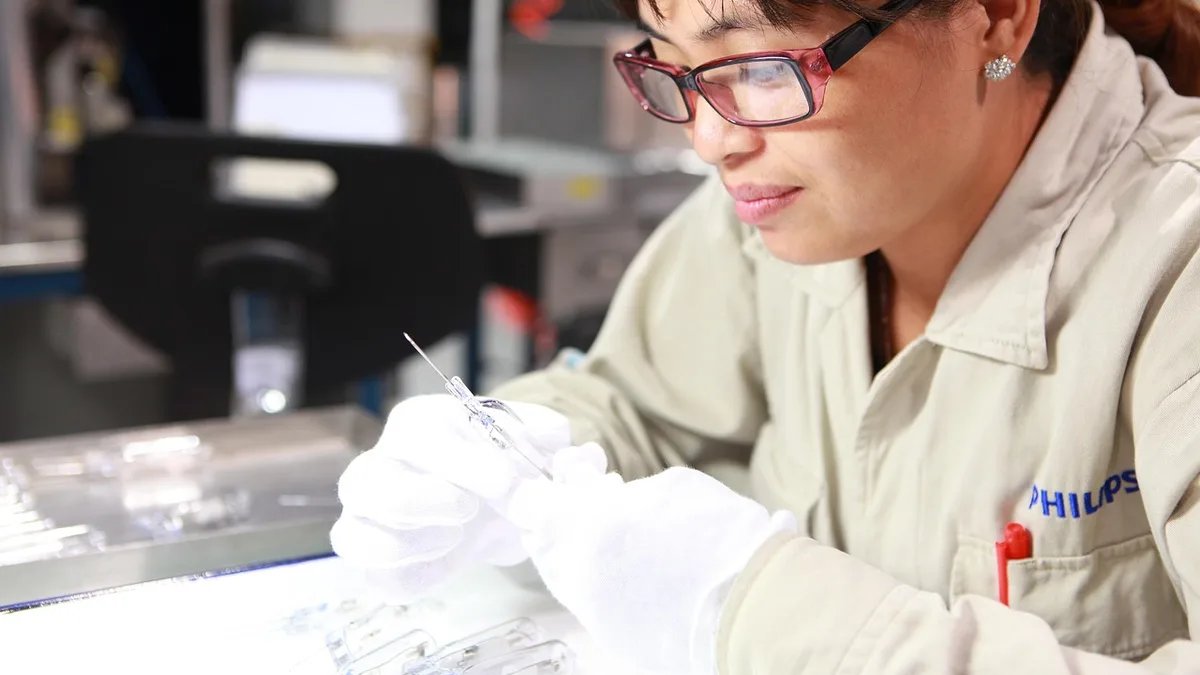
A compliant PIF cannot be compiled purely on paper. It requires certified laboratory test reports conducted on final production or pilot batches:
- Accelerated stability and packaging compatibility testing: subjecting product samples in final commercial packaging to 40°C thermal stress for 8 to 12 weeks to monitor pH stability, organoleptic parameters, viscosity, and container hermeticity.
- Microbiological challenge test (ISO 11930) (ISO 11930): inoculating aqueous formulas with microbial strains (bacteria, yeasts, molds) to verify preservative efficacy over 28 days.
- Dermatological patch test: validating human skin compatibility under occlusive or semi-occlusive patch test protocols under dermatologist supervision.
For a comprehensive review of necessary laboratory testing, read our technical guide on cosmetic stability testing and our protocol review for the cosmetic challenge test (ISO 11930).
Frequently Asked Questions About the Product Information File (PIF)
- Is the PIF required if I only sell my cosmetics online or in local craft markets?
- Yes, absolutely. The obligation to compile and hold a PIF applies to any cosmetic product made available on the mercato europeo, whether distributed online, sold in large retail chains, or hand-crafted and sold at artisanal fairs. There is zero regulatory exemption based on sales volume or business size.
- Where must the PIF be stored physically?
- The PIF must be held at the single address specified on the product label (the registered European office of the Persona Responsabile). It can be stored electronically (in a secure shared online workspace or local secure server) as long as it is readily accessible in the official language of the Member State upon health authority inspection.
- Can I write the PIF myself without an expert?
- You can compile administrative sections (product description, GMP (ISO 22716) declaration, packaging label artwork, and claim substantiation). However, Part B of the CPSR (Cosmetic Product Safety Report) (the valutazione della sicurezza itself) legally requires the formal qualification and signature of an authorized Valutatore della Sicurezza holding an accredited university degree under Article 10(2) of Regolamento (CE) N. 1223/2009.
Configurez votre projet en direct
Calculez le tarif de votre DIP Cosmétique
Définissez votre profil, votre type de formule et vos besoins en tests de laboratoire pour obtenir une estimation instantanée et transparente.