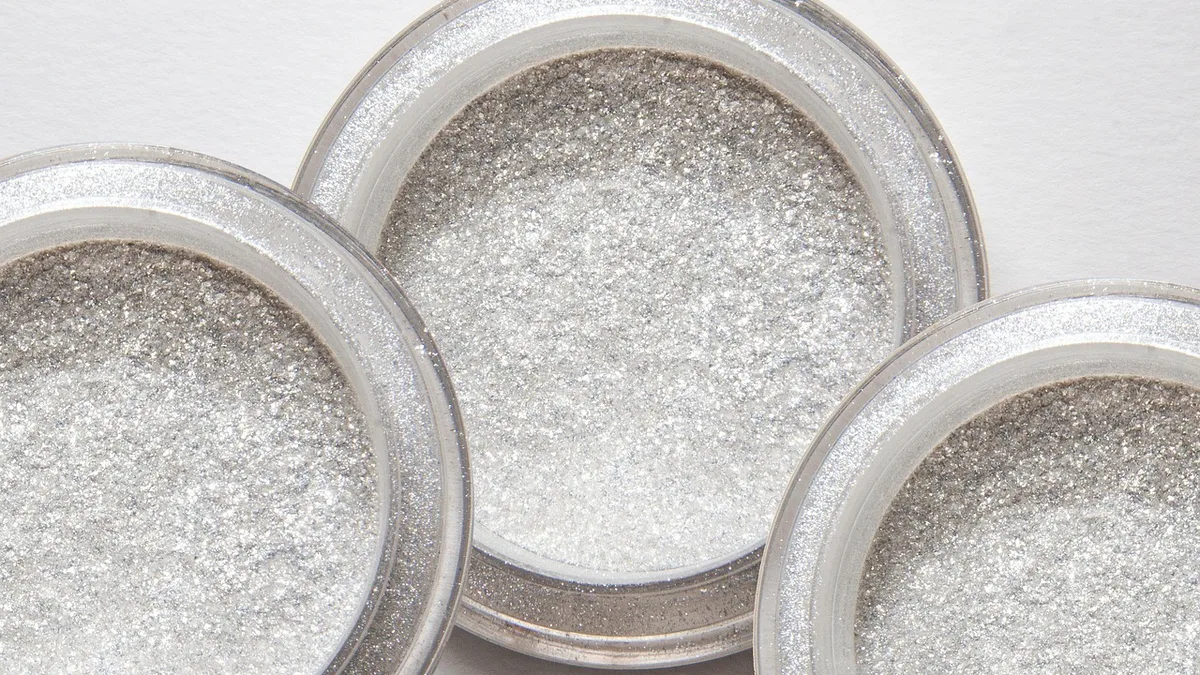
Highlighter Makeup: Pearlescent Formulation, Mica Purity, and EU Regulatory Compliance
Highlighters (complexion illuminators) are a staple in modern decorative cosmetics, sculpting facial contours through light reflection (the strobing technique). Whether presented as a pressed pearlescent powder, a liquid illuminator, or a creamy stick, its formulation relies on high concentrations of reflective micas and mineral pigments. Marketing an illuminator across the European Union requires complying with the toxicological and physical safety standards of Regolamento (CE) N. 1223/2009. From mica purity assays to full PIF compilation, discover our comprehensive compliance guide.
💡 Launching an illuminator or pearlescent powder range? Ensure the regulatory compliance of your formulas. Estimate your costs in 2 minutes with our configurator.
Composition of Highlighters: Pearlescent Micas, Pigments, and Binders
A high-performance highlighter deposits a uniform reflective film on targeted facial zones (cheekbones, Cupid's bow, brow arches) without accentuating pores or skin texture:
- Pearlescent Micas and Effect Pigments: Natural mica (INCI: Mica) or synthetic fluorphlogopite coated with titanium dioxide (CI 77891) or iron oxides. These pearlescent pigments must meet purity specifications in Annex IV of Regolamento (CE) N. 1223/2009, particularly regarding heavy metal trace limits.
- Powder Foundation Matrix (for Pressed Versions): Cosmetic-grade talc (certified 100% asbestos-free) or silica, providing structural cohesion, velvety glide, and skin adhesion.
- Lipid Binder System (Cohesion): Lightweight botanical oils (such as jojoba oil) or synthetic esters that bind powders into durable pressed pans.
The PIF compiles all formulation, purity, and physical stability data. To review standard requirements for decorative cosmetics, see our overview on makeup regulatory compliance and our core guide on the PIF cosmetici.
🔬 Insights from our Valutatore della Sicurezza Cosmetica
"Highlighters formulated as anhydrous compact powders present very low microbiological risk under ISO 29621 and are exempt from preservative challenge testing. Conversely, verifying talc purity (guaranteed absence of asbestos fibers) and heavy metal limits for micas is essential before the Cosmetic Product Safety Report (CPSR (Cosmetic Product Safety Report)) can be signed. For liquid highlighters containing water, a preservative challenge test (ISO 11930) under ISO 11930 remains mandatory."
Regulatory Steps to Ensure Compliance for Highlighters
To market your highlighter legally in France or across the EU, execute the following steps:
- Accelerated Stability and Drop Testing: Thermal stability at 40°C over 8 to 12 weeks, paired with standardized physical drop testing to confirm pressed powder pan integrity during transport.
- Cosmetic Product Safety Report (CPSR (Cosmetic Product Safety Report)): Toxicological assessment and formal sign-off by our qualified expert, with strict heavy metal limits verified for all colorant batches.
- CPNP Registration: Mandatory notification of every finished cosmetic shade on the European Cosmetic Products Notification Portal prior to distribution.
Our team delivers complete regulatory compliance packages. Find out more about our packages and transparent pricing on our PIF services page.
⚠️ 3 Frequent Compliance Pitfalls in Highlighters
- Heavy Metal Contamination in Pearlescent Pigments: Micas extracted from substandard mines can contain lead, cadmium, or arsenic exceeding SCCS safety thresholds.
- Exceeding Permissible Fragrance Allergen Concentrations: Regulated allergens (limonene, linalool) in leave-on complexion products must be listed in the INCI declaration once exceeding 0.001%.
- Thermal Phase Separation in Liquid Illuminators: Fluid highlighters that phase-separate or agglomerate at 40°C in an accelerated stability oven fail to achieve a compliant stability report for the PIF.

Regulatory Cross-Linking Across Product Categories
If your brand also formulates adjacent complexion or grooming cosmetics, explore our related guides:
- For comprehensive complexion formulation rules, see our guide on complexion makeup regulation.
- For associated men's grooming essentials, see our guide on shaving foam regulation.
- For chemical hair removal formulas, see our guide on depilatory cream regulation.
Frequently Asked Questions on Highlighter Regulations
- Is container compatibility testing required for pressed makeup palettes?
- Yes. Pressed powder highlighters are compacted into metal godet pans housed within plastic or cardboard compacts. Accelerated stability testing (8 to 12 weeks at 40°C) verifies that lipid binders do not corrode the metallic godet pan and that pan-bonding adhesives maintain structural hold.
- What is the regulatory difference between natural mica and synthetic fluorphlogopite?
- Synthetic fluorphlogopite (synthetic mica) is synthesized in controlled laboratory environments, guaranteeing high chemical purity, consistent particle morphology, and zero heavy metal contamination, while resolving supply chain ethics concerns. Both natural and synthetic micas are authorized under Annex IV, provided purity specifications are documented.
- How do you formulate a liquid highlighter for the PIF?
- Liquid highlighters are formulated as fluid oil-in-water emulsions or aqueous gels suspending pearlescent pigments. Because they contain water, a preservative challenge test (ISO 11930) under ISO 11930 is legally mandatory to confirm antimicrobial stability.

Configurez votre projet en direct
Calculez le tarif de votre DIP Cosmétique
Définissez votre profil, votre type de formule et vos besoins en tests de laboratoire pour obtenir une estimation instantanée et transparente.