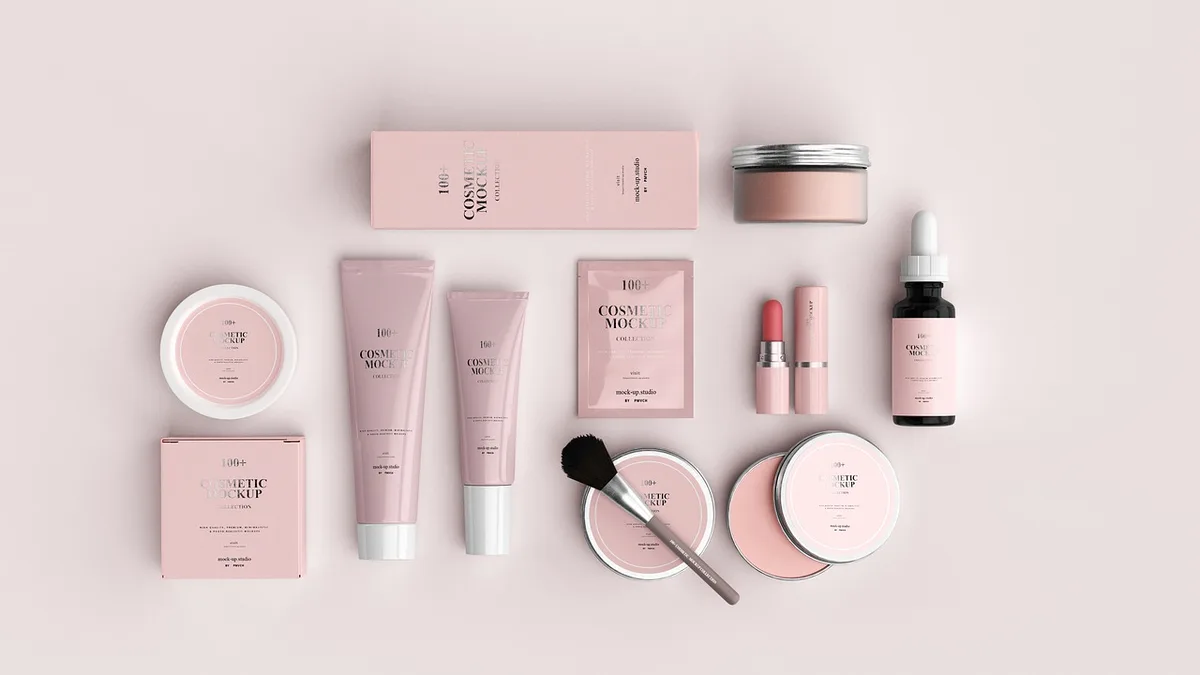
White-Label and Private-Label Cosmetics: Legal Obligations, Persona Responsabile Status, and PIF Management
Launching a cosmetic brand utilizing turnkey, pre-developed formulations produced by a contract manufacturer (the white-label or private-label model) is an established industrial strategy. It drastically lowers upfront R&D investment and significantly accelerates time-to-market. However, under European regulations, affixing your commercial brand name to a pre-formulated product fundamentally transforms your legal liabilities. In Europe, you are legally designated as the Persona Responsabile (RP) and must hold a complete Product Information File (PIF) (PIF) registered under your corporate identity. Here is how to navigate this legal journey.
💡 Launching a white-label or private-label cosmetic line? Do not overlook your statutory Persona Responsabile obligations. Calculate your regulatory compliance fees in 2 minutes with our configurator.
The White-Label Cosmetic Model and the Legal Transfer of Responsibility
In a conventional white-label arrangement, a contract manufacturing laboratory designs, formulates, tests, and manufactures a standard cosmetic reference (such as a moisturizing face cream or solid shampoo bar). It then offers third-party brands the opportunity to customize the packaging and apply their own commercial trademark.
While this operational model streamlines manufacturing, Article 4 of Regolamento (CE) N. 1223/2009 is explicit: the moment you market a cosmetic product under your own company name or commercial trademark, you are legally designated as the Persona Responsabile (RP) in Europe.
This Persona Responsabile status means you bear full legal liability for the finished product before consumers and mercato europeo surveillance authorities (such as the ANSM and DGCCRF in France). You are legally mandated to:
- Hold custody of the complete PIF cosmetici compiled specifically under your brand name and registered corporate address.
- Guarantee multilingual labeling compliance in the national language(s) of every destination country.
- Perform finished product notification under your entity name on the centralized European portale CPNP.
- Manage cosmetovigilance systems (logging, investigating, and reporting serious undesirable effects to health authorities).
The mere fact that the contract manufacturer holds an internal technical dossier for their generic formulation does not exempt you from holding an official, personalized Product Information File (PIF) under your own brand identity.
🔬 Insights from our Valutatore della Sicurezza Cosmetica
"When an indie brand launches a private-label reference, the contract manufacturer often provides a generic compliance certificate. However, this one-page certificate is legally insufficient during a regulatory inspection by national authorities. Inspectors require the complete 5-part PIF bearing the exact brand name and Persona Responsabile address. We routinely collaborate directly with contract manufacturing laboratories under Non-Disclosure Agreements (NDAs) to obtain confidential quantitative formulation data, draft the required CPSR (Cosmetic Product Safety Report) Part B in the brand's name, and assemble a fully compliant PIF without exposing the manufacturer's proprietary trade secrets."
How to Manage PIF Compilation for White-Label Cosmetic Lines
To commercialize your private-label line legally, two primary contractual pathways exist with your contract manufacturer:
Option 1: The Contract Manufacturer Shares Full Technical Documentation (Delegated PIF)
This represents the most transparent pathway. The manufacturing laboratory provides all raw test reports (physicochemical stability, ISO 11930 preservation challenge testing) and raw material specification dossiers (CoA, SDS, TDS). Our regulatory team and tossicologo compile these data points to author the Cosmetic Product Safety Report (CPSR (Cosmetic Product Safety Report)) under your brand name and finalize your PIF. Review our fee schedules in our guide on PIF cosmetici pricing and explore our tailored PIF services.
Option 2: The Contract Manufacturer Retains Formula Secrecy (PIF Under Confidentiality Agreement / NDA)
If the manufacturer refuses to disclose its exact quantitative formulation to protect proprietary industrial trade secrets, it can transmit the quantitative breakdown directly to our tossicologo under a strict bilateral NDA. The valutatore della sicurezza conducts the toxicological valutazione della sicurezza, files the quantitative profile in our secure regulatory registry, and issues the official CPSR (Cosmetic Product Safety Report) Part B and compliance certificate to the brand. Proprietary trade secrets remain 100% protected.
To learn more about toxicological evaluations and safety reports, explore our guide on cosmetic valutazione della sicurezza (CPSR (Cosmetic Product Safety Report)).
⚠️ 3 High-Stakes Traps in Private-Label Cosmetics
- Selling under the manufacturer's CPNP number with your commercial brand: If product packaging displays your brand name, relying on the manufacturer's initial CPNP registration constitutes illegal misbranding and regulatory non-compliance. Each brand must register its own notification linked to its Persona Responsabile identity.
- Altering fragrance or shade variants without formal reassessment: Requesting the contract manufacturer to add a custom fragrance or unique pigment to a standard base invalidates the original toxicological safety evaluation. The revised formula requires a formal PIF addendum with updated Margin of Safety (MoS) calculations.
- Neglecting a bilateral manufacturing quality agreement: Brands must establish a comprehensive contract manufacturing agreement specifying who holds RP status, who manages cosmetovigilance, and how regulatory updates (such as newly banned Annex II substances or allergen labeling transitions) will be financed.
Buone Pratiche di Fabbricazione (GMP (ISO 22716)) (GMP (ISO 22716) / ISO 22716) in White-Label Distribution
Even if you do not physically manufacture products, European law mandates that you ensure the cosmetic was produced in strict compliance with Buone Pratiche di Fabbricazione (GMP (ISO 22716)) (GMP (ISO 22716) / ISO 22716). You must obtain an official GMP (ISO 22716) compliance declaration issued following a manufacturing facility inspection.
For detailed insights into manufacturing laboratory operations, consult our guide on cosmetic contract manufacturing PIF.
Frequently Asked Questions About White-Label Cosmetics
- Can the contract manufacturer be designated as the Persona Responsabile for my brand?
- Yes, this is legally permissible under Article 4. Through a formal written mandate, you can appoint the contract manufacturer as the statutory Persona Responsabile for products sold under your brand. In this case, the manufacturer's legal name and European address must appear on commercial labels, and the manufacturer maintains the PIF and liaises with health authorities. Manufacturers typically charge substantial recurring fees for this legal representation.
- Can I redesign secondary packaging without re-evaluating the PIF?
- If modifying only external graphic artwork on secondary cartons without altering formulation, primary container, INCI list, or mandatory regulatory markings, no new valutazione della sicurezza is required. Simply update the product identification section of the PIF with new packaging photos and update the visual file on CPNP.
- Can I commercialize white-label cosmetics manufactured outside the European Union?
- Yes, but this requires heightened diligence. When importing from third countries (e.g., China, Korea, or the US), the European brand automatically becomes the importer and statutory Persona Responsabile. The brand must assemble the complete European PIF at its own expense, prove ISO 22716 GMP (ISO 22716) equivalence for the foreign production site, and validate complete quantitative data before physical importation into EU customs territory.
Configurez votre projet en direct
Calculez le tarif de votre DIP Cosmétique
Définissez votre profil, votre type de formule et vos besoins en tests de laboratoire pour obtenir une estimation instantanée et transparente.