Hair Oil: Natural Formulation Secrets and EU Regulatory Compliance
Hair oil is the ultimate deep-conditioning treatment in modern haircare. Whether utilized as a pre-shampoo oil bath, a finishing serum to smooth split ends, or a lightweight heat protectant, it delivers visible performance through pure botanical nutrition. However, commercializing a hair oil across the European Union requires rigorous compliance with Regolamento (CE) N. 1223/2009. Although typically anhydrous, hair oils must satisfy strict safety, labeling, and stability standards. Here is our complete regulatory guide.
💡 Launching a hair oil or scalp care brand? Ensure the regulatory compliance of your formulas. Estimate your costs in 2 minutes with our configurator.
Formulating High-Performance Natural Hair Oils
An effective hair oil must nourish the keratin structure without suffocating the scalp or weighing down fine hair strands. It typically blends vegetable oils of varying viscosities to achieve balanced glide:
- Castor Oil (Ricinus Communis Seed Oil): High in ricinoleic acid, castor oil coats the cuticle, enhances mechanical strength, and supports healthy growth. Highly viscous, it is usually dosed at 10% to 20% and diluted with lighter botanical lipids.
- Argan Oil (Argania Spinosa Kernel Oil): Packed with unsaponifiables and natural vitamin E, argan oil imparts brilliant shine and softness to dry and color-treated hair.
- Jojoba Oil (Simmondsia Chinensis Seed Oil): A liquid wax ester with a composition closely mimicking human sebum. It balances scalp lipid production and protects hair fiber from moisture loss without greasy residue.
- Lightweight Carrier Lipids: Macadamia oil, grapeseed oil, or fractionated coconut oil (Caprylic/Capric Triglyceride) to enhance spreadability and facilitate effortless application.
- Antioxidants: Tocopherol (vitamin E) is compulsory to shield botanical lipids from oxidative rancidity caused by light and air.
Compiling a complete PIF cosmetici is legally required for every commercial formula. For standard requirements in haircare, review our guide on the hair care & beard PIF.
🔬 Insights from our Valutatore della Sicurezza Cosmetica
"Hair oils formulated exclusively from botanical lipids and essential oils are waterless (anhydrous) products. Classified as low microbiological risk formulations under ISO 29621, they are exempt from challenge testing, which saves testing costs and accelerates market entry. In contrast, accelerated physicochemical stability testing at 40°C over 8 weeks is mandatory to verify that the product resists lipid rancidity (which releases skin-irritating aldehydes) and photolytic discoloration in glass or PET containers."
Regulatory Steps to Ensure Compliance for Hair Oils
To market your hair oil legally in France or across the EU, execute the following steps:
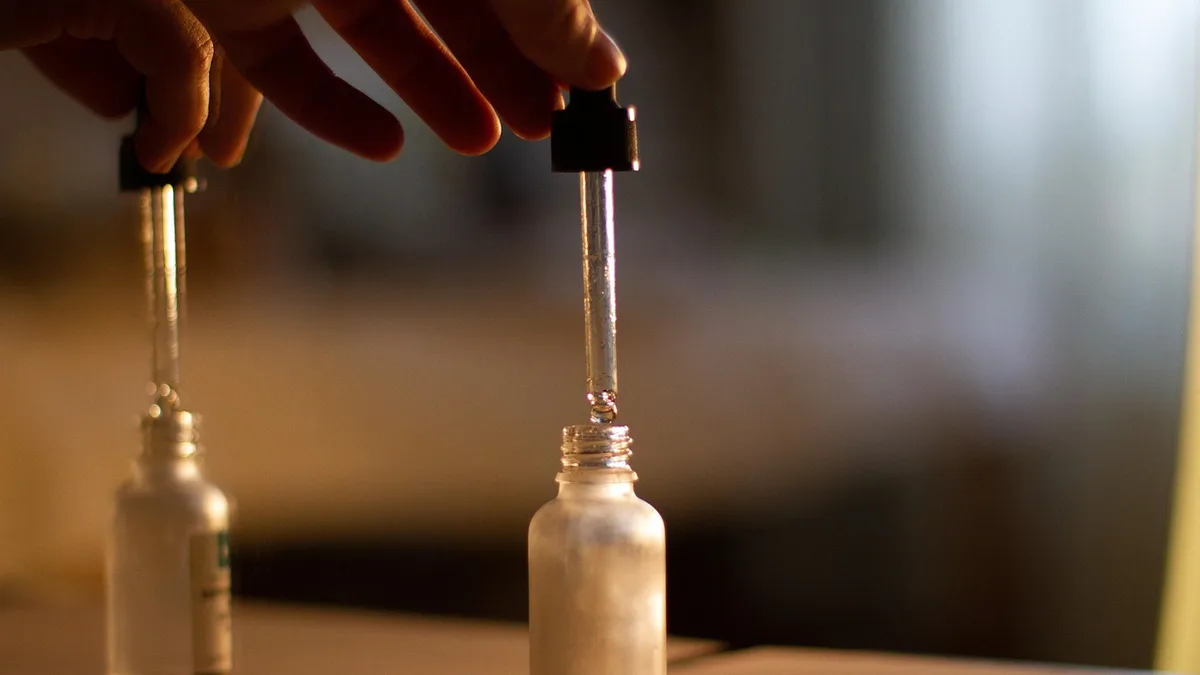
- Thermal Stability and Packaging Compatibility: Accelerated thermal aging tests at 40°C over 8 to 12 weeks to confirm the formula remains clear, odorless, and compatible with glass dropper pipettes or pumps.
- Cosmetic Product Safety Report (CPSR (Cosmetic Product Safety Report)): Toxicological assessment and formal sign-off by our qualified Valutatore della Sicurezza under Article 10(2), with close review of essential oil exposure near the scalp and neck.
- CPNP Registration: Mandatory notification of every finished cosmetic shade on the European Cosmetic Products Notification Portal prior to distribution.
Our team delivers complete regulatory compliance packages. Find out more about our packages and transparent pricing on our PIF services page.
⚠️ 3 Frequent Compliance Pitfalls in Hair Oils
- Excessive Essential Oil Dosages: Essential oils applied to the scalp carry heightened absorption potential if micro-abrasions exist. Over-concentrating sensitizers like linalool or limonene can prevent CPSR (Cosmetic Product Safety Report) sign-off.
- Omitting Minimum Durability Date or PAO: Because natural lipids oxidize over time, accelerated stability results must dictate whether the packaging displays a Minimum Durability Date (hourglass symbol) or a Period After Opening (open jar symbol).
- Making Prohibited Anti-Hair Loss Claims: Stating that a cosmetic hair oil "cures alopecia" or "stops hereditary hair loss" without rigorous, independent clinical trials breaches Regulation (EU) No 655/2013 and risks drug classification.

Regulatory Cross-Linking Across Product Categories
If you also formulate complementary haircare or treatment products, review our related guides:
- For textured curl routines, see our guide on the textured hair routine.
- For intensive hair conditioning treatments, explore our guide on hair mask regulation.
- For homemade starch-based care recipes, read our guide on cornstarch hair mask PIF.
Frequently Asked Questions on Hair Oil Regulations
- Is container compatibility testing required for glass dropper pipettes?
- Yes. Hair oils are often packed in glass bottles with rubber or elastomer dropper bulbs. Accelerated stability testing (8 to 12 weeks at 40°C) verifies that the essential oils and lipids do not swell, soften, or leach into the elastomer bulb, and that closure seals remain liquid-tight.
- Can silicones be incorporated into hair oils?
- Yes. Silicones (such as Dimethicone) are authorized in conventional cosmetics and widely used in commercial hair serums for instant frizz reduction. The Valutatore della Sicurezza verifies that cyclic silicones (D4, D5, D6) comply with EU environmental and concentration restrictions. In certified organic lines (Cosmos Organic), silicones are prohibited and substituted with natural esters.
- How do you substantiate a "heat protection" claim for hair oil?
- A "heat protection" claim (e.g., up to 230°C) requires objective instrumental verification. Testing laboratories subject standardized hair tresses to controlled flat-iron heating, measuring water loss from keratin and performing scanning electron microscopy (SEM) on cuticle integrity to confirm protective efficacy.
✨ Vous formulez des huiles parfumées pour le corps, la barbe ou les cheveux ? Consultez notre accompagnement dédié au DIP Parfumerie & Produits Corporels Parfumés (380 € HT), ainsi que nos guides pour le parfum solide et la brume corporelle.
Configurez votre projet en direct
Calculez le tarif de votre DIP Cosmétique
Définissez votre profil, votre type de formule et vos besoins en tests de laboratoire pour obtenir une estimation instantanée et transparente.