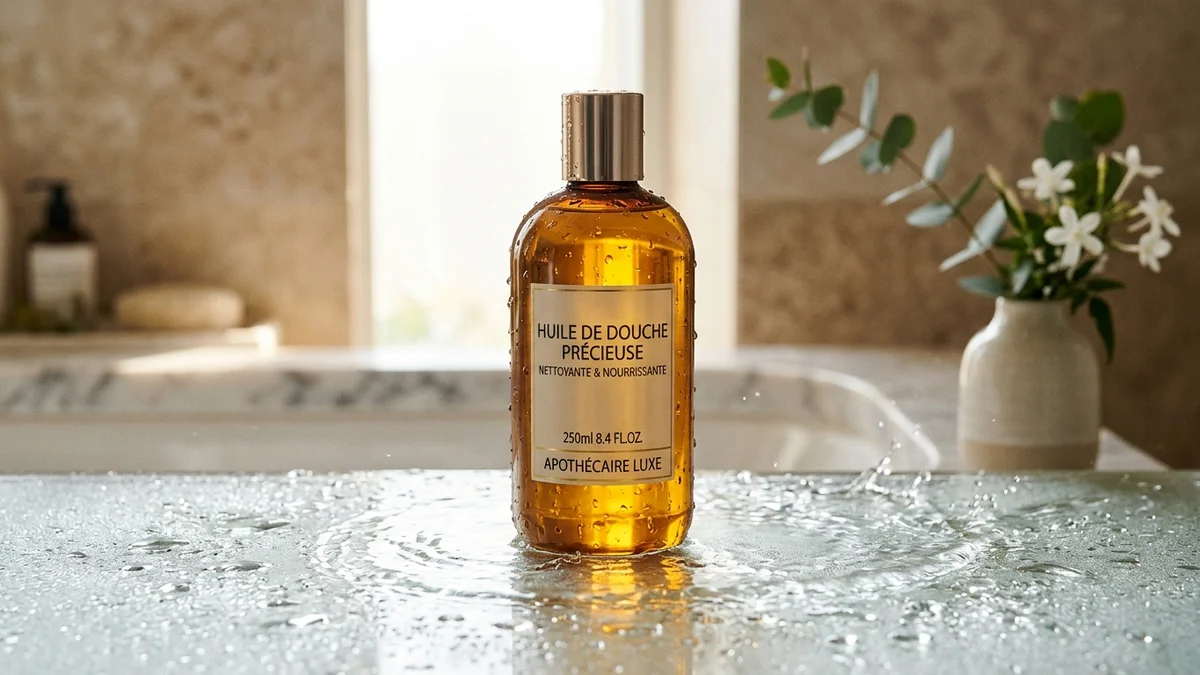
Shower Oil: Lipid-Replenishing Formulation Secrets and EU Regulatory Compliance
Shower oil is the premier body cleansing format for very dry, sensitive, or atopic-prone skin. Designed to cleanse while depositing a protective lipid film (counteracting the drying effects of hard water and aggressive surfactants), its formulation combines high concentrations of botanical oils with gentle emulsifying surfactants. However, marketing this cosmetic across the European Union requires ensuring microbiological safety and robust cutaneous and ocular tolerance under Regolamento (CE) N. 1223/2009. Here is our complete compliance guide.
💡 Formulating a shower oil or lipid-replenishing wash? Ensure the regulatory compliance of your personal care line. Estimate your costs in 2 minutes with our configurator.
The Chemistry of Shower Oils: Anhydrous Blends vs Aqueous Emulsions
Formulators of shower cleansing oils generally select between two distinct galenic architectures, which dictate the regulatory profile and mandatory testing requirements:
- Anhydrous Shower Oil: Formulated solely with botanical oils or esters (typically over 50%) and an oil-soluble hydrophilic surfactant (such as MIPA-Laureth Sulfate or Polyglyceryl-4 Oleate). Because it contains no free water, it presents low microbiological susceptibility under ISO 29621 and is exempt from preservative challenge testing. Physicochemical stability and oxidation checks remain mandatory.
- Aqueous Shower Oil: A high-internal-phase emulsion containing water, mild surfactants, and suspended botanical lipids. This system delivers a lighter texture and richer lather. Because it incorporates water, a microbiological challenge test (ISO 11930) under ISO 11930 is legally mandatory to confirm preservative efficacy.
The shower oil PIF compiles these complete formulation, manufacturing, and safety records. For baseline requirements on body formulations, consult our guide on the body care & hygiene PIF and our central overview on the PIF cosmetici.
🔬 Insights from our Valutatore della Sicurezza Cosmetica
"Given the substantial concentration of unsaturated vegetable oils, the risk of oxidative rancidity under warm, humid bathroom conditions must be anticipated. Oxidation produces free volatile aldehydes that irritate atopic skin barriers. Incorporating a robust antioxidant such as Tocopherol (vitamin E) at 0.2% to 0.5% is essential to stabilize the formula. Furthermore, during showering, product runoff can enter the ocular area, making in vitro ocular tolerance testing (HET-CAM) highly recommended to substantiate the CPSR (Cosmetic Product Safety Report)."
Regulatory Steps to Ensure Compliance for Shower Oils
To market your shower oil legally in France, Switzerland, or the wider European Union, follow these mandatory steps:
- Thermal Stability and Packaging Compatibility: Accelerated thermal testing at 40°C over 8 to 12 weeks to confirm viscosity remains constant and phases do not separate.
- Microbiological Challenge Testing: Mandatory for all water-containing formulations under ISO 11930.
- Cosmetic Product Safety Report (CPSR (Cosmetic Product Safety Report)): Toxicological review and official sign-off by our qualified Valutatore della Sicurezza under Article 10(2), with strict calculations for fragrance allergens.
- CPNP Registration: Mandatory notification of every finished cosmetic shade on the European Cosmetic Products Notification Portal prior to distribution.
Our team delivers turnkey regulatory compliance packages. Find out more about our packages and transparent pricing on our PIF services page.
⚠️ 3 Frequent Compliance Pitfalls in Shower Oils
- Undeclared Fragrance Allergens: If your fragrance oil contains linalool, geraniol, or limonene above 0.01% (the threshold for rinse-off cosmetics), they must appear explicitly in the INCI declaration.
- Thermal Instability Under Heat Stress: If the cleansing oil clouds, breaks, or separates at 40°C in an accelerated stability chamber, it cannot receive a favorable stability report for the PIF.
- Making Prohibited Eczema Claims: Promoting your shower oil as a treatment for eczema or atopic dermatitis is strictly prohibited under European cosmetics law. Confine claims to cosmetic benefits ("gently nourishes dry skin", "protects against skin dryness").
Regulatory Cross-Linking Across Product Categories
If your brand also formulates adjacent body or extremity care lines, explore our dedicated guides:
- For barrier hand creams, consult our guide on hand cream regulation.
- For hand polishing exfoliants, see our guide on hand scrub regulation.
- For targeted foot care formulas, check our guide on foot cream regulation.
Frequently Asked Questions on Shower Oil Regulations
- Is container compatibility testing required for plastic shower bottles?
- Yes. Shower oils are packaged in plastic bottles (PET, rPET, or HDPE) fitted with flip-top caps or dispensing pumps. During accelerated stability testing (8 to 12 weeks at 40°C), the laboratory verifies that botanical oils and surfactants do not stress-crack the container and that pump mechanisms operate smoothly without internal gasket degradation.
- Can phenoxyethanol be used as a preservative in an organic shower oil?
- Phenoxyethanol is authorized in conventional cosmetics up to 1.0% under Annex V of Regolamento (CE) N. 1223/2009. However, it is strictly banned by organic certification bodies (Cosmos Organic, Ecocert). For certified organic shower oils, formulators replace it with authorized organic-approved preservatives, such as sodium benzoate and potassium sorbate.
- How do you substantiate a "lipid-replenishing" claim for shower oil?
- A "lipid-replenishing" or anti-dryness claim requires objective scientific evidence. Laboratories perform instrumental clinical evaluations (such as corneometry to measure stratum corneum hydration and evaporimetry to measure Transepidermal Water Loss: TEWL) on volunteer panels before and after standardized showering trials.

Configurez votre projet en direct
Calculez le tarif de votre DIP Cosmétique
Définissez votre profil, votre type de formule et vos besoins en tests de laboratoire pour obtenir une estimation instantanée et transparente.