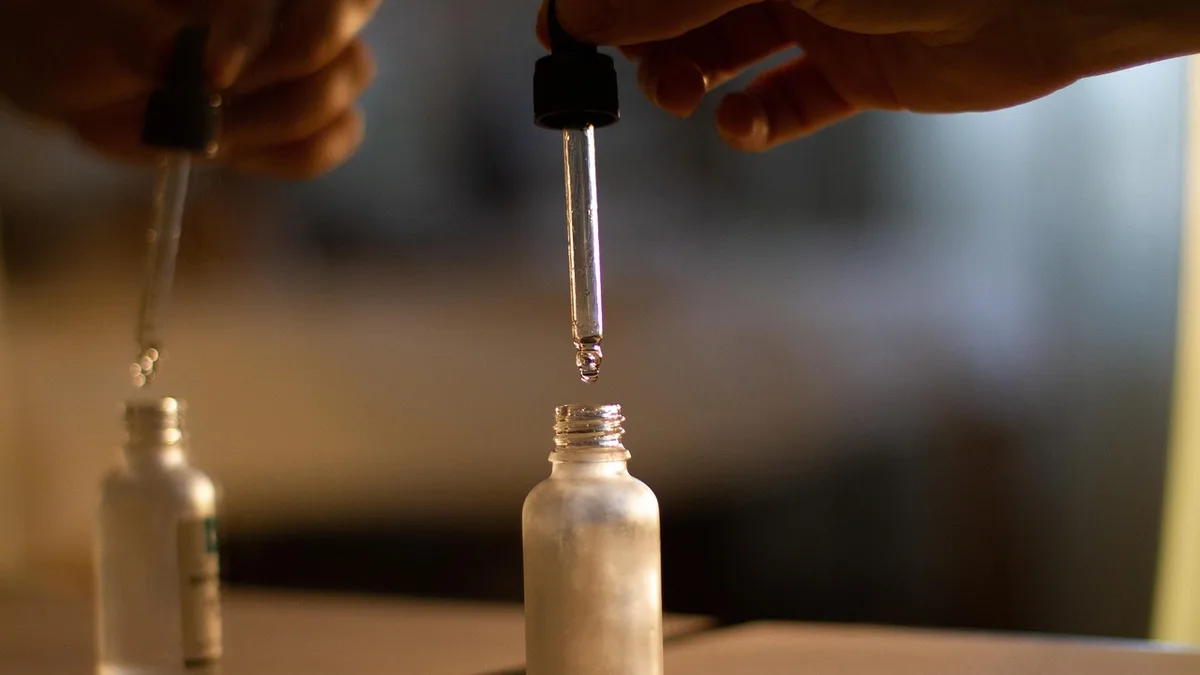
🔬 Qui est habilité à signer votre CPSR ? Découvrez les diplômes exigés par l'Article 10(2) et les missions de l'évaluateur de la sécurité cosmétique (toxicologue cosmétique).
Cosmetic Product Safety Report (CPSR (Cosmetic Product Safety Report)): Technical Reference Guide
The Cosmetic Product Safety Report (CPSR (Cosmetic Product Safety Report)) is the most technical, critical, and rigorously inspected document in any cosmetic regulatory compliance file. Required under Article 10 of European Regolamento (CE) N. 1223/2009, this centerpiece must be compiled and signed by a qualified Valutatore della Sicurezza Cosmetica / Tossicologo holding recognized university credentials in pharmacy, toxicology, medicine, or a related discipline. Here is our complete technical guide detailing the structure, mathematical calculations, and validation criteria of an official CPSR (Cosmetic Product Safety Report).
💡 Does your cosmetic product need an official valutazione della sicurezza? Entrust your formulations to our qualified Valutatore della Sicurezza Cosmetica / Tossicologo and obtain your signed CPSR (Cosmetic Product Safety Report). Accurate quote in 2 minutes.
Regulatory Structure of the CPSR (Cosmetic Product Safety Report): Part A and Part B
Annex I of the European Cosmetic Regulation divides the safety report into two mandatory, interdependent sections:
Part A: Cosmetic Product Safety Information
This descriptive first section compiles all empirical input data relating to the product. The brand and formulation laboratory must provide the Valutatore della Sicurezza with:
- Complete quantitative and qualitative formulation (with exact INCI nomenclature, CAS numbers, and ingredient functions).
- Physicochemical and microbiological specifications of raw materials and the finished cosmetic.
- Physicochemical stability data and container-content compatibility test reports.
- Microbiological challenge test (ISO 11930) results (ISO 11930) for aqueous formulas.
- Raw material purity profiles (absence of heavy metals, residual process solvents).
- Individual toxicological profiles for every chemical substance in the formula (dermal irritation, ocular tolerance, skin sensitization, systemic toxicity, mutagenicity).
Part B: Cosmetic Product Valutazione della Sicurezza
This second section represents the reasoned conclusion drafted, dated, and signed by the Valutatore della Sicurezza Cosmetica / Tossicologo. It includes:
- An explicit safety statement: formal declaration certifying that the cosmetic product is safe for human health under normal or reasonably foreseeable conditions of use.
- Mandatory label warnings and precautions for use (e.g., "do not use on children under 3 years of age", "contains linalool").
- Scientific reasoning substantiating the conclusion (explanation of toxicological safety margins).
- The Valutatore della Sicurezza's official credentials, academic degrees (pharmacy, toxicology), and formal signature under Article 10(2).
The CPSR (Cosmetic Product Safety Report) represents the cornerstone of your comprehensive PIF cosmetici.
🔬 Insights from our Valutatore della Sicurezza Cosmetica
"Part B is never a superficial administrative sign-off. It engages my professional legal and civil liability. To validate a formula, I conduct precise systemic exposure calculations based on the SCCS Notes of Guidance published by the European Commission. For example, for a preservative present at 0.5% in a body lotion, I calculate the Systemic Exposure Dose (SED) and compare it against the No Observed Adverse Effect Level (NOAEL) established in validated toxicological studies. The resulting Margin of Safety (MoS) must be strictly greater than or equal to 100 before I can sign the report. Without this methodological rigor, the CPSR (Cosmetic Product Safety Report) cannot withstand scrutiny during health authority inspections."

Key Toxicological Calculations Performed During Valutazione della Sicurezza
The safety evaluation relies on toxicological algorithms defined by the Scientific Committee on Consumer Safety (SCCS):
1. Systemic Exposure Dose (SED):
SED (mg/kg bw/day) = (A * C * DAp) / 100 * BW
Where A represents the daily finished product application amount (g/day), C is the substance concentration (%), DAp is the dermal absorption percentage, and BW is the reference human body weight (standardized at 60 kg for adults by the SCCS).
2. Margin of Safety (MoS):
MoS = NOAEL / SED
For a chemical substance to be deemed safe, the Margin of Safety (MoS) must be **equal to or greater than 100**. This factor of 100 accounts for inter-species extrapolation (a factor of 10 for animal-to-human differences) and intra-species human variability (a factor of 10 for human sensitivity differences).
Our regulatory team provides comprehensive PIF services covering complete formula validation according to these mandatory toxicological standards.
⚠️ 3 Frequent Regulatory Deficiencies in CPSR (Cosmetic Product Safety Report) Files
- Omitting MoS calculations for fragrance allergens: fragrance certificates must be analyzed quantitatively, and allergens (linalool, limonene, geraniol) evaluated individually. To understand the associated legal responsibilities, consult our guide on the cosmetic Persona Responsabile.
- Inconclusive or failed stability tests: if stability documentation exhibits phase separation or unaccounted pH drift, the Valutatore della Sicurezza cannot certify formula safety across shelf life.
- Submitting a CPNP notification without a signed CPSR (Cosmetic Product Safety Report): this constitutes a serious regulatory offense subject to severe administrative and criminal penalties. To learn about final registration steps, read our guide on CPNP notification portal.
The Complete Safety Dossier Journey: From PIF to Market Launch
A signed CPSR (Cosmetic Product Safety Report) constitutes the mandatory legal proof of safety that must reside within your core compliance file. For an exhaustive overview of the entire process, consult our complete PIF cosmetici guide.
Frequently Asked Questions About CPSR (Cosmetic Product Safety Report) Valutazione della Sicurezza
- Why does the Valutatore della Sicurezza require fragrance allergen certificates?
- Fragrances and essential oils contain naturally occurring volatile molecules with skin-sensitizing potential. European cosmetic regulations require declaring these allergens on product packaging whenever their concentrations exceed 0.001% in leave-on products (such as face creams) or 0.01% in rinse-off products (such as shampoos). The Valutatore della Sicurezza must calculate the exact concentrations of these substances to verify compliance with both EU Annex III limits and IFRA standards.
- Can a CPSR (Cosmetic Product Safety Report) be drafted without animal testing?
- Yes, absolutely. Since 2013, animal testing for cosmetic products and cosmetic ingredients has been completely banned in Europe under Regolamento (CE) N. 1223/2009. The Valutatore della Sicurezza establishes safety using historical scientific literature, validated in vitro non-animal test methods, clinical human patch test data, and established Read-Across toxicological methodologies.
- How long does a signed CPSR (Cosmetic Product Safety Report) remain legally valid?
- A signed CPSR (Cosmetic Product Safety Report) does not have an arbitrary expiration date. It remains legally valid as long as the formulation remains unchanged, raw material sources and primary packaging stay identical, and European cosmetic regulations do not impose new restrictions on the ingredients. If a substance in your formula becomes subject to a newly enacted restriction under EU Annexes II, III, V, or VI, the CPSR (Cosmetic Product Safety Report) must be formally updated with a signed addendum.
Configurez votre projet en direct
Calculez le tarif de votre DIP Cosmétique
Définissez votre profil, votre type de formule et vos besoins en tests de laboratoire pour obtenir une estimation instantanée et transparente.